

Resilience Starts at Home: From Local Action to Regional Resilience
Written by Rosa De León
For too long, disaster risk reduction has focused on post-disaster response rather than on the conditions that determine who is exposed, who can prepare, and who is able to recover. Under the 2026 theme “Resilience Starts at Home”, the International Day for Disaster Risk Reduction, observed annually on 13 October, highlights the home as both the primary site where disaster impacts are felt and a central place for reducing risk and building resilience (United Nations Office for Disaster Risk Reduction [UNDRR], 2026).
This perspective is particularly relevant to the Greater Caribbean. Across a region exposed to hurricanes, storm surges, coastal flooding, and erosion, the safety of a home depends not only on its construction but also on access to essential services, reliable warnings and the resources needed to prepare and recover. These conditions are not distributed equally. Low-income households, persons with disabilities, older people and communities with limited access to secure housing, finance or public services can face additional barriers to safety.
The economic consequences can also be substantial. Small Island Developing States (SIDS) experience average annual disaster losses exceeding 3% of GDP (World Bank, 2004), placing pressure on public finances and long-term development. Hurricane Iota, which struck Colombia’s San Andrés, Providencia and Santa Catalina archipelago in November 2020, illustrates the vulnerability of island communities. Approximately 98% of Providencia's infrastructure was reported damaged, with most homes damaged or destroyed housing, disrupting essential services, and local livelihoods (Carta Internacional Espacio y Grandes Desastres, 2020).
Resilience, therefore, cannot be reduced to individual or household preparedness. It requires addressing the social, institutional, and environmental conditions that shape vulnerability before a disaster occurs. Communities must be active participants in risk reduction; they cannot, however, provide safe infrastructure, accessible evacuation routes or the resources needed for recovery on their own.
Local residents often understand which roads flood, which households may need to evacuate and how livelihoods depend on seasonal conditions. Integrating this knowledge into planning can make preparedness measures more responsive to local realities. However, meaningful participation must be supported by public investment and institutions that are accountable for protecting communities. Recognizing this, the Association of Caribbean States (ACS) has included Community-Based Disaster Risk Reduction as Intervention 3.1 of its Strategic Plan: Greater Caribbean 2035 - A Shared Horizon from Our Common Sea towards Sustainable Development and Well-Being, an intervention focused on community participation, traditional knowledge, gender equality and social inclusion.
Resilience also depends on connecting risk information with practical action. Scientific data, geospatial mapping, and risk modelling can help identify exposed areas, but information alone cannot protect a household. Warnings must reach people in accessible formats and be linked to clear evacuation procedures and institutions capable of acting. The ACS Strategic Plan: Greater Caribbean 2035 seeks to address these challenges through Intervention 3.2, Risk-Informed Decision-Making and Data-Driven Governance, and Intervention 3.3, Integrated Risk Governance and Policy Alignment. These priorities emphasize risk information, institutional coordination, and the integration of disaster risk considerations into development and investment decisions.
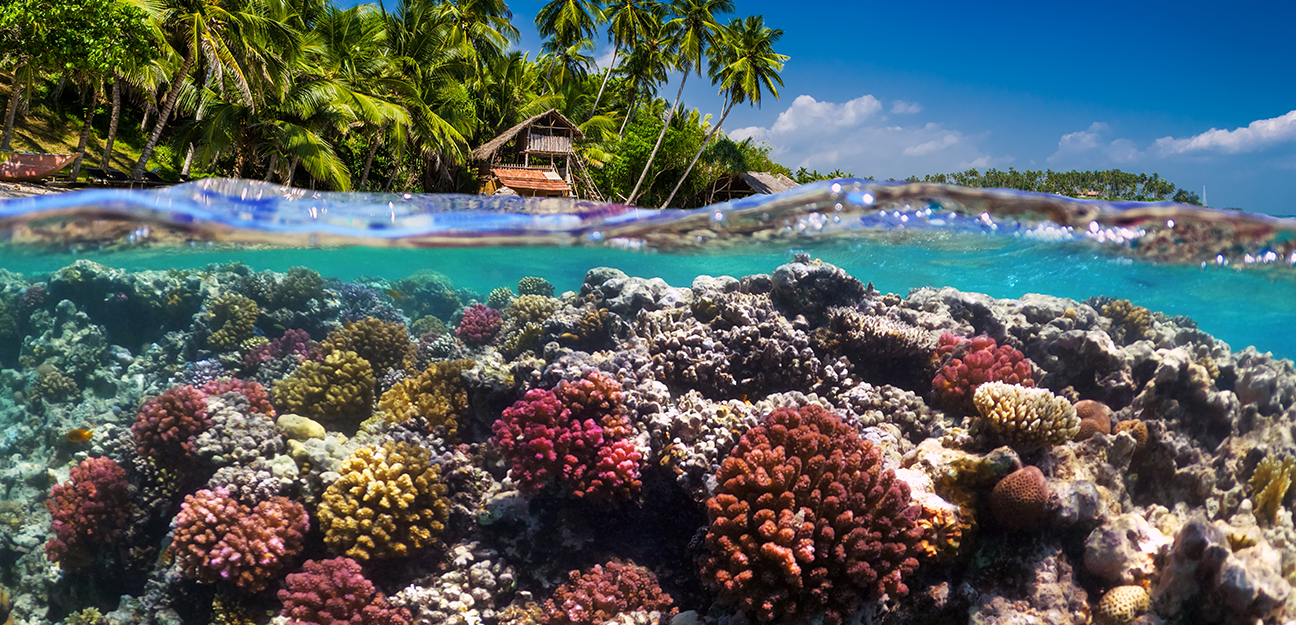
The link between local safety and wider environmental systems is particularly visible along Caribbean coastlines. Coral reefs support biodiversity and livelihoods, while also acting as natural infrastructure that reduces wave energy reaching shorelines. A global analysis by Ferrario et al. (2014) found that coral reefs reduce wave energy by an average of 97% across the studies examined. The researchers also reported median costs of USD 1,290 per meter for structural coral reef restoration, compared with USD 19,791 per metre for artificial breakwaters. Although costs and protective benefits vary by location and project design, these findings highlight the potential value of reef restoration as part of coastal risk reduction.
Protecting ecosystems is therefore not separate from protecting communities. Degraded reefs can weaken natural coastal protection while threatening fisheries, tourism, and other sources of income. Restoring reefs can complement resilient infrastructure and effective public planning, although it cannot replace them. A broader approach to resilience must consider the relationship between homes, livelihoods and the ecosystems on which coastal communities depend.
A practical example of this approach is the Triangular Cooperation Project between Colombia, Japan, and the Greater Caribbean on Coral Restoration and Disaster Risk Reduction. The initiative seeks to connect technical expertise, restoration methodologies, and monitoring approaches to support coral restoration as a measure to reduce coastal risk, through a pilot in Colombia and national action plans across the Greater Caribbean. In doing so, it seeks to link ecosystem protection to the safety and livelihoods of coastal communities.
Within this project, the ACS acts as a regional convener, connecting Greater Caribbean Member States with this triangular partnership, in line with the priority its Strategic Plan gives to South-South and triangular cooperation. As a result, seven (7) technical experts from five (5) Member States (The Bahamas, Barbados, Cuba, Honduras and Mexico) are developing national action plans that link coral restoration with disaster risk reduction, identifying priority intervention areas, activities and institutional responsibilities. Collectively, these plans signal a shift from isolated restoration projects towards more coordinated, risk-informed approaches. The process has also laid the foundations for sustained regional cooperation, including technical mentoring between countries and a proposed regional restoration platform. This experience reflects a broader role for the ACS: facilitating the exchange of expertise and connecting local experience with regional priorities. Intervention 3.4 of the ACS Strategic Plan, Knowledge-Sharing and Advocacy for a Resilient Future, reinforces this role, aiming to catalyze knowledge exchange and the sharing of best practices that can support resilience across the Greater Caribbean. Regional cooperation does not require every country to adopt identical solutions. Rather, it creates opportunities to learn from different experiences and adapt approaches to local ecological, institutional, and social conditions.
“Resilience Starts at Home” should not be interpreted as placing the burden of disaster preparedness on individual households. It calls for ensuring that people have the conditions, resources and institutional support needed to live safely. Through its Strategic Plan to 2035 and its regional cooperation initiatives, the ACS contributes to this shared effort by connecting knowledge, institutions and countries across the Greater Caribbean.
Resilience begins where risk is experienced, but it can only be strengthened through collective responsibility. Community participation must inform decisions, risk information must lead to practical action, and ecosystem protection must be recognized as part of safeguarding homes and livelihoods.
References
Carta Internacional Espacio y Grandes Desastres. (2020, noviembre 27). Huracán Iota en Colombia - Activaciones de Carta. Disasterscharter.Org. https://disasterscharter.org/es/activations/storm-hurricane-urban-in-colombia-activation-687-
Ferrario, F., Beck, M. W., Storlazzi, C. D., Micheli, F., Shepard, C. C., & Airoldi, L. (2014). The effectiveness of coral reefs for coastal hazard risk reduction and adaptation. Nature Communications, 5(1). https://doi.org/10.1038/ncomms4794
United Nations Office for Disaster Risk Reduction. (2026). International Day for Disaster Risk Reduction (IDDRR) 2026 “Resilience Starts at Home”. https://iddrr.undrr.org/media/118609/download?startDownload=20261009
World Bank. (2004). Financial protection against natural disasters (p. 13). https://openknowledge.worldbank.org/entities/publication/0845dc7f-86a5-56f3-bc9a-b8f2290f0b0d


Compartir


