
International Mother Earth Day 2026
By: Alina Reis and Robin Montano
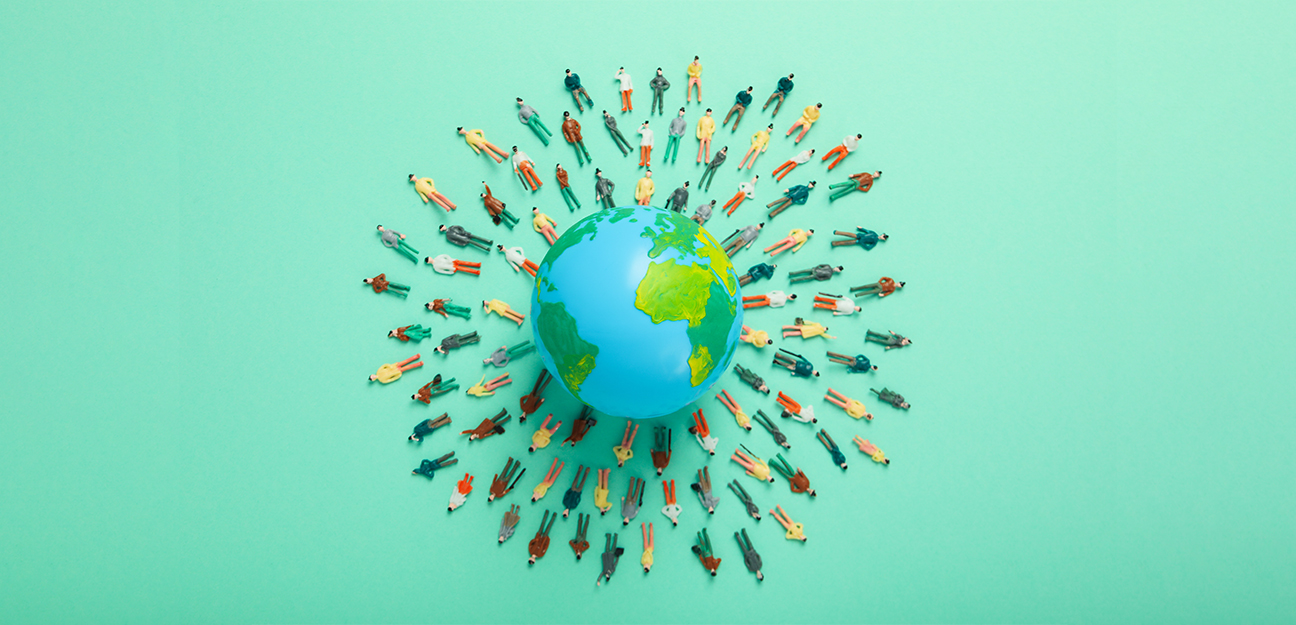
Observed annually on April 22, International Mother Earth Day underscores a critical truth: the future of humanity depends on the health and resilience of our planet. Recognized by the United Nations, its observance calls for renewed commitment to sustainable development, climate action and biodiversity protection, aligning with the Sustainable Development Goals (SDGs), particularly SDG 13 on Climate Action and SDG 15 on Life on Land (UN, 2009).
Collectively, these efforts seek to answer a direct call from Mother Earth, an urgent plea for action as nature continues to bear the consequences of human activity. The question remains: Who will answer her call?
Industrialization and technological advancement have significantly improved human development, transforming how we work, travel, trade, build communities, and live our daily lives. However, these advances have also contributed to an era marked by rising global temperatures, accelerating biodiversity loss, and increasing environmental degradation. As such, the need for collective action has never been more urgent.
Humanity has been pushing beyond Earth’s material limits, destabilizing the very biophysical systems that have sustained civilization throughout the Holocene (Fletcher et al., 2024). These impacts are not evenly shared: vulnerable populations disproportionately bear the burden of rising temperatures, food and water insecurity, and ecosystem collapse, further deepening global inequities.
In the Greater Caribbean, climate change and environmental degradation are already reshaping daily life. Rising sea levels, stronger hurricanes, prolonged droughts, and increasing sargassum influxes are placing mounting pressures on communities and ecosystems, as coastal flooding, infrastructure damage, water scarcity, and ecosystem degradation disrupts livelihoods and reduces natural protective barriers.
These impacts threaten critical sectors such as tourism, fisheries, and agriculture, while also undermining biodiversity and increasing health and economic risks for vulnerable populations. Small Island Developing States (SIDS) are particularly vulnerable, as their economies, food security, and infrastructure are closely tied to fragile coastal and marine environments (Rana & Ali, 2022).
Regional climate data indicate a steady increase in temperatures over the past century, with some even noting as much as a 1.5°C increase in average temperatures, with projections pointing to continued warming and more frequent extreme events (Taylor & Stephenson, 2017).
The increasing influx of sargassum across the Caribbean provides a clear example of how environmental changes are already affecting the region. Since 2011, unprecedented volumes have washed ashore, overwhelming coastal ecosystems and communities; in June 2018 alone, an estimated 20 million tonnes washed along Caribbean coastlines (FAO, 2023; Shelly-Ann & Karima, 2021).
In countries such as Barbados and Trinidad and Tobago, these accumulations have disrupted tourism, fisheries, and coastal livelihoods. As sargassum decomposes, it releases gases such as hydrogen sulphide and ammonia, which can pose health risks and create unpleasant living conditions for nearby residents (Shelly-Ann & Karima, 2021).
We’ve already seen this threat affect vulnerable populations in Martinique and Guadeloupe, who experienced a major influx event in 2018, that resulted in the reporting of 11,402 cases of acute exposure to sargassum gases, with some patients being hospitalised into intensive care (Résiere et al., 2018).
Beyond human health, large blooms can block sunlight from reaching coral reefs and seagrass beds, reducing oxygen levels in coastal waters, and threaten marine biodiversity (FAO, 2023). These impacts manifest locally through declining fish stocks, beach closures, public health emergencies, and increased costs for coastal management and cleanup.
For small businesses and coastal communities that depend heavily on tourism and fishing, these events have resulted in economic losses and increased vulnerability. The sargassum crisis highlights the complex and interconnected nature of environmental change in the Greater Caribbean, where climate variability, ocean circulation patterns, and human activity interact to produce significant local impacts.
Across the Greater Caribbean, efforts are underway to address these environmental challenges through a combination of policy innovation, regional cooperation, and community-based action. Governments and regional organizations are increasingly investing in climate adaptation strategies, including coastal zone management, disaster risk reduction, and the transition toward renewable energy sources.
For example, several Caribbean states have expanded solar and wind energy initiatives to reduce dependence on fossil fuels while lowering greenhouse gas emissions (Rana & Ali, 2022). At the same time, ecosystem-based approaches such as mangrove restoration and coral reef conservation are being promoted to enhance natural coastal protection and biodiversity resilience.
Civil society organizations and local communities also play a critical role, leading initiatives focused on environmental education, sustainable resource use, and conservation practices. These combined efforts not only help to mitigate the impacts of climate change but also enable more sustainable economic development, strengthen community resilience, and support the long-term protection of the region’s natural resources.
Within this context, the Association of Caribbean States (ACS) plays a critical role in advancing environmental sustainability and resilience across the Greater Caribbean. Through its Directorate for Disaster Risk Reduction, Sustainable Tourism, the Caribbean Sea and Environment (DDTCE), the ACS promotes coordinated regional action to address these environmental challenges, including climate change, sargassum, biodiversity loss, and marine pollution.
In support of this mandate, the ACS has advanced targeted initiatives such as the Korea-ACS Joint Ocean Research Center (K-ACS JORC), which was designed in collaboration with the Korea Institute of Ocean Science and Technology (KIOST) to be hosted at INVEMAR in Santa Marta Colombia, with the intent to create a regional oceanic hub that strengthens regional capacity for oceanographic research, data sharing, and sustainable marine resource management.
Additionally, through the Strengthening Hydrometeorological Operations and Services in Caribbean SIDS (SHOCS) project, the ACS, in partnership with the Finnish Meteorological Institute, worked to enhance early warning systems, improve weather and climate monitoring, and build technical capacity among Member States to better respond to climate-related hazards. Through its broaderDisaster Risk Reduction framework, the ACS further supports the integration of climate adaptation and risk management into national development planning, fostering a culture of resilience and preparedness among Member States and Associate Members. By promoting cooperation, knowledge sharing and inclusive participation by Member States and Associate Members, the ACS enables a more unified regional response to environmental challenges. Thus, reinforcing the Greater Caribbean’s capacity to protect its ecosystems while advancing sustainable development goals.
On this International Mother Earth Day, the message is clear: protecting the environment is not only an ecological necessity, but a shared responsibility that underpins the future of the Greater Caribbean. As climate change intensifies and environmental pressures continue to mount, the region stands at a critical crossroads, one that demands sustained commitment, collective action, and innovative solutions. In this regard, the Association of Caribbean States continues to play a pivotal role in strengthening regional cooperation, promoting sustainable practices, and supporting its Members in building resilience to environmental challenges. Ultimately, answering the call of Mother Earth requires more than awareness, it demands decisive action to restore balance and secure a resilient and sustainable future for generations to come.
References
Taylor, M. A., & Stephenson, K. A. (2017). Impacts of climate change on sea temperature in the coastal and marine environments of Caribbean Small Island Developing States (SIDS). In Caribbean marine climate change report card: Science review 2017 (pp. 23–30). Caribbean Regional Fisheries Mechanism. https://crfm.int/~uwohxjxf/images/3._Sea_Temperature.pdf
FAO. (2023). WESTERN CENTRAL ATLANTIC FISHERY COMMISSION (WECAFC) NINETEENTH SESSION Bridgetown, Barbados, 6-8 September 2023 Impacts of Sargassum on marine resources in the region and utilization of initiatives. https://openknowledge.fao.org/server/api/core/bitstreams/67016b1b-08d1-…
Fletcher, C., Ripple, W. J., Newsome, T., Barnard, P., Beamer, K., Behl, A., Bowen, J., Cooney, M., Crist, E., Field, C., Hiser, K., Karl, D. M., King, D. A., Mann, M. E., McGregor, D. P., Mora, C., Oreskes, N., & Wilson, M. (2024). Earth at risk: An urgent call to end the age of destruction and forge a just and sustainable future. PNAS Nexus, 3(4). https://doi.org/10.1093/pnasnexus/pgae106
Rana, F., & Ali, A. (2022). RENEWABLE ENERGY TARGETS IN SMALL ISLAND DEVELOPING STATES. https://www.irena.org/-/media/Files/IRENA/Agency/Publication/2022/Nov/I…
Résiere, D., Valentino, R., Névière, R., Banydeen, R., Gueye, P., Florentin, J., Cabié, A., Lebrun, T., Mégarbane, B., Guerrier, G., & Mehdaoui, H. (2018). Sargassum seaweed on Caribbean islands: An international public health concern. The Lancet, 392(10165), 2691. https://doi.org/10.1016/S0140-6736(18)32777-6
Shelly-Ann, C., & Karima, D. (2021). SARGASSUM WHITE PAPER: Turning the crisis into an opportunity | The Caribbean Environment Programme (CEP). Www.unep.org. https://www.unep.org/cep/resources/publication/sargassum-white-paper-tu…
United Nations . (2009). Resolution adopted by the General Assembly on 22 April 2009 ,63/278. International Mother Earth Day . Un.org. https://docs.un.org/en/A/RES/63/278


Share


Related Articles
The Greater Caribbean Day: Recognising a Shared Region, Strengthening a Shared Future
By: Anaïs Régina-Renel Introduction
Beyond Fragmented Governance: Reimagining the Caribbean Sea as a Common Patrimony - World Oceans Day 2026
By: Robin Alberto Montano
Guarding the Heartbeat of the Caribbean Sea: World Reef Awareness Day 2026
By: Robin Alberto Montano